Key Takeaways:
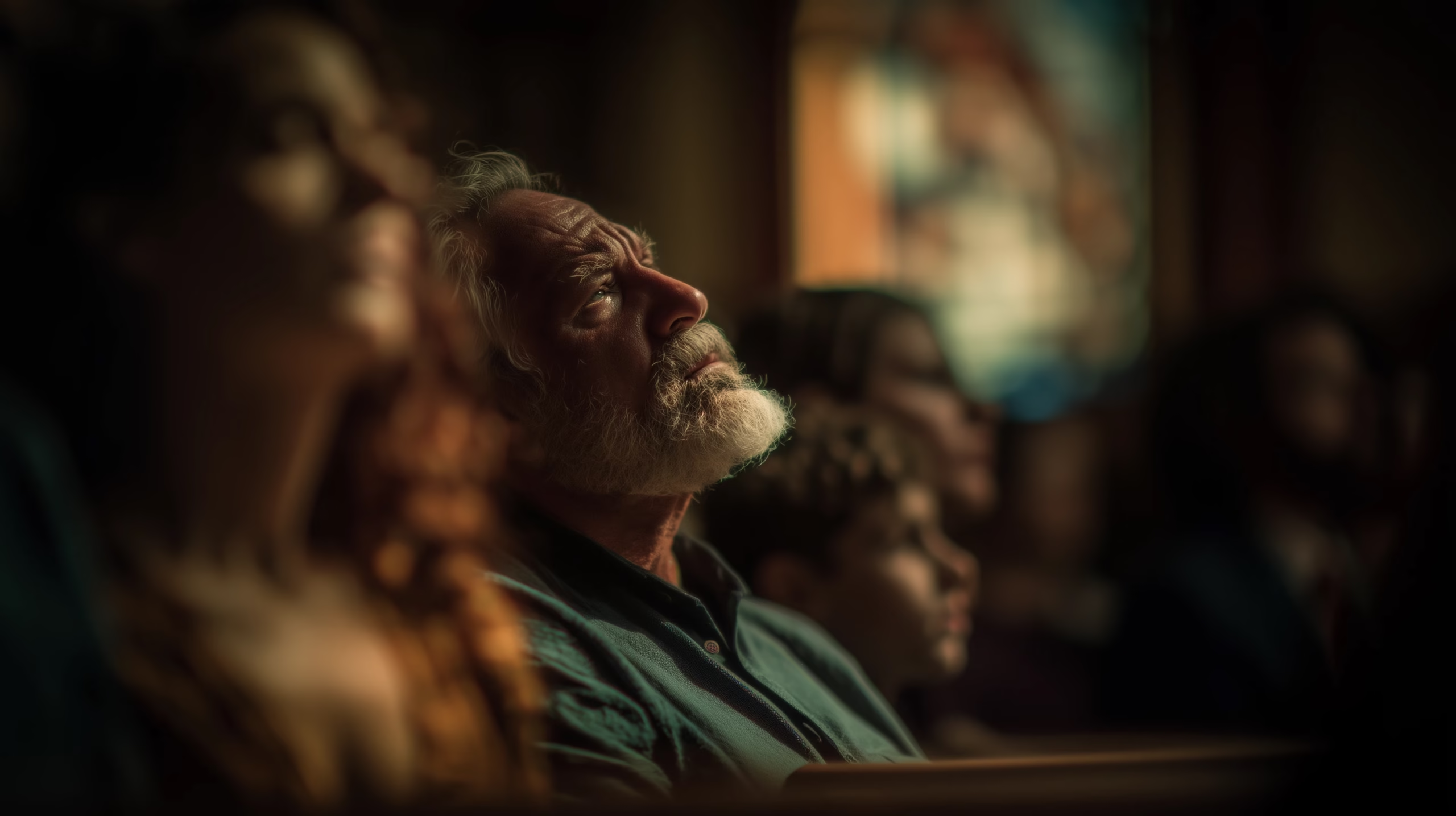
When a new family walks into your church in Cumming or Gainesville, they make a subconscious judgment about the environment within seven seconds—long before the pastor even approaches the pulpit. If the worship band is feeding back or the announcements are muffled, visitors do not fill out a connection card to complain. Instead, they internalize the frustration, assume they just “aren’t smart enough” to follow along, or conclude that your church doesn’t care about excellence. They simply slip out the back door and never return, leaving your leadership team wondering why congregation growth has plateaued.
Your pastor spends hours praying over and preparing a message, but if your sanctuary is filled with hard walls and high ceilings, that message turns into acoustic mud before it reaches the back pews. We consistently see churches lose up to 40% of their sermon’s intelligibility due to excessive echo and poorly placed speakers. The trap here is that your long-term members have neurologically adapted to the room; they know exactly which seats to avoid. A first-time guest has no such map, and when they sit in an audio “dead spot,” the emotional weight of the service is entirely lost.
Bad audio is a massive financial liability dressed up as “budget savings.” Many church boards try to save money by purchasing cheap, temporary fixes off the internet, but these band-aid repairs compound your technical debt. When you factor in the reality that losing just five families to poor sound can cost a ministry up to $25,000 in lost annual tithes, the “cheap” route becomes devastatingly expensive. Effective stewardship requires adopting the 80% rule: replacing and upgrading failing core equipment before an Easter Sunday crisis forces an expensive, panicked capital campaign.
The two groups most impacted by bad audio are the ones least likely to complain. Your elderly members, who are often your most faithful attendees and givers, suffer silently from high-frequency hearing loss that makes muddy speech impossible to decode. Meanwhile, millennial visitors and young families are subconsciously comparing your sanctuary’s audio to the pristine sound they experience at their local coffee shop or gym. To truly welcome your community, professional audio tuning and assistive listening systems (like hearing loops) are no longer optional upgrades; they are basic hospitality requirements.
The stress of a failing sound system almost always falls on the shoulders of an untrained, overworked volunteer in the sound booth. If your mixing console looks like a NASA control panel and requires an engineering degree to operate, your volunteers are likely one Sunday away from quitting. You can stop this burnout by partnering with a local AV integrator to simplify your workflow, establish reliable baseline “scenes” on your digital board, and provide hands-on training. When your tech team feels confident and equipped, they stop panicking over red lights and start actively supporting the ministry.
DCMM LC © 2025. All Rights Reserved.
Powered by Astrowave | Privacy Policy.
