Key Takeaways:
Your church building sits mostly quiet all week, drawing minimal bandwidth. Then Sunday morning arrives, and 1,000 people walk through the doors simultaneously holding smartphones, trying to download the digital bulletin or open their Bible app. We call this the “Sunday Surge,” and it is the exact reason why the consumer-grade internet router sitting in your church office melts down every weekend. While massive Atlanta facilities have long understood the need for enterprise-level IT, many small to mid-sized churches in North Georgia are still trying to run modern, device-heavy ministries on residential networking gear.
Providing guest WiFi is no longer a luxury; it is a basic hospitality expectation. However, a standard wireless access point cannot handle 500 devices connecting in a single room. To eliminate the spinning wheel of death during service, your sanctuary requires a high-density wireless deployment. This means strategically placing enterprise-grade access points every 30 to 40 feet, ensuring each unit is responsible for only about 50 devices. When properly engineered, we have seen local Georgia churches improve their successful guest connection rates from a frustrating 40% to 98% in under ten seconds.
Churches are built on trust, but that inherent trust creates massive vulnerabilities in network security. If your lobby giving kiosk, your production team’s media server, and your guest WiFi are all running on the same open network, your ministry is at risk. Hackers specifically target houses of worship because they process high volumes of credit card data but often lack dedicated IT security, resulting in an average loss of $30,000 per breach. The foundational fix is network segmentation (VLANs), which creates invisible walls that separate guest traffic from your secure financial and production data.
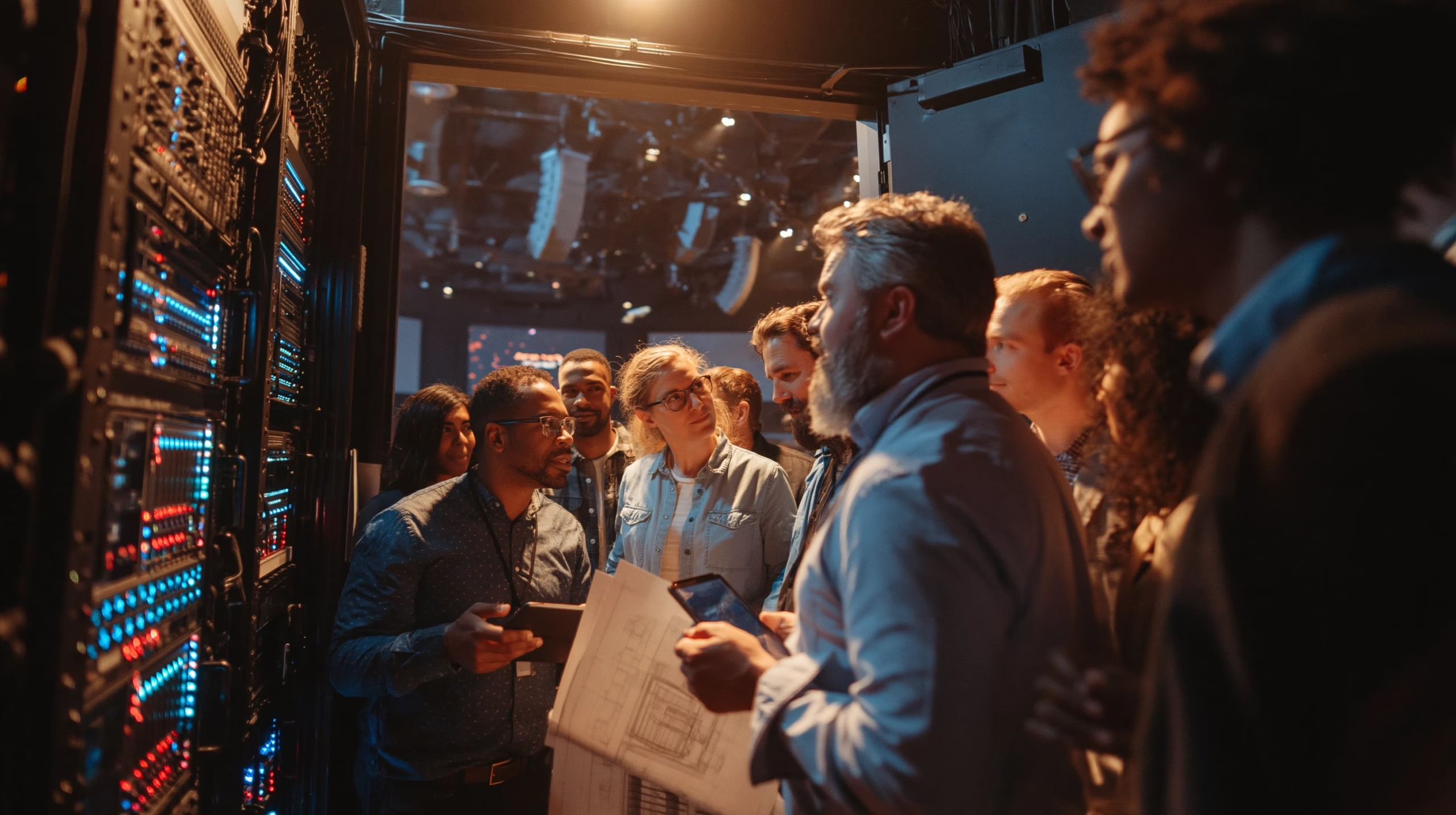
If your Sunday live stream constantly drops frames or loses audio sync, your network infrastructure is likely to blame. Professional broadcast quality cannot rely on a wireless connection or shared bandwidth. Your media servers require dedicated, hardwired Cat6A cabling to ensure the production booth maintains uninterrupted connectivity to your video switchers and audio consoles. For ministries expanding to multiple locations across North Georgia, real-time multi-campus connectivity demands leased fiber lines that can maintain under 150ms of latency between sites.
A network upgrade does not have to be a massive, disruptive overhaul that shuts down your facility. Smart stewardship involves a phased implementation approach, starting with securing your core firewall and upgrading the main sanctuary WiFi before expanding to youth buildings or fellowship halls. You need an infrastructure that can support your ministry’s growth for the next seven years, not just a temporary band-aid for next Sunday’s service.
DCMM LC © 2025. All Rights Reserved.
Powered by Astrowave | Privacy Policy.
