Security
Which Commercial Security Cameras Fit Your Jacksonville Facility?
Choosing the right commercial security cameras starts with matching camera types to your facility’s specific risks. Fixed domes, bullets, PTZ, turrets, and specialty cameras like thermal and license plate recognition each solve different problems. This guide breaks down which cameras fit your space, the features worth prioritizing, real installation costs, and the Florida legal rules you can’t afford to ignore.
Quick Summary:
- Match camera types (dome, bullet, PTZ, turret) to specific facility zones
- Prioritize 4K resolution, weatherproofing, and AI analytics for accuracy
- Costs range $1,500-$5,000 small business, $50,000+ enterprise systems
- Follow Florida privacy laws: no audio, restrict recording in private areas
What Types of Commercial Security Cameras Are Available for Your Facility?
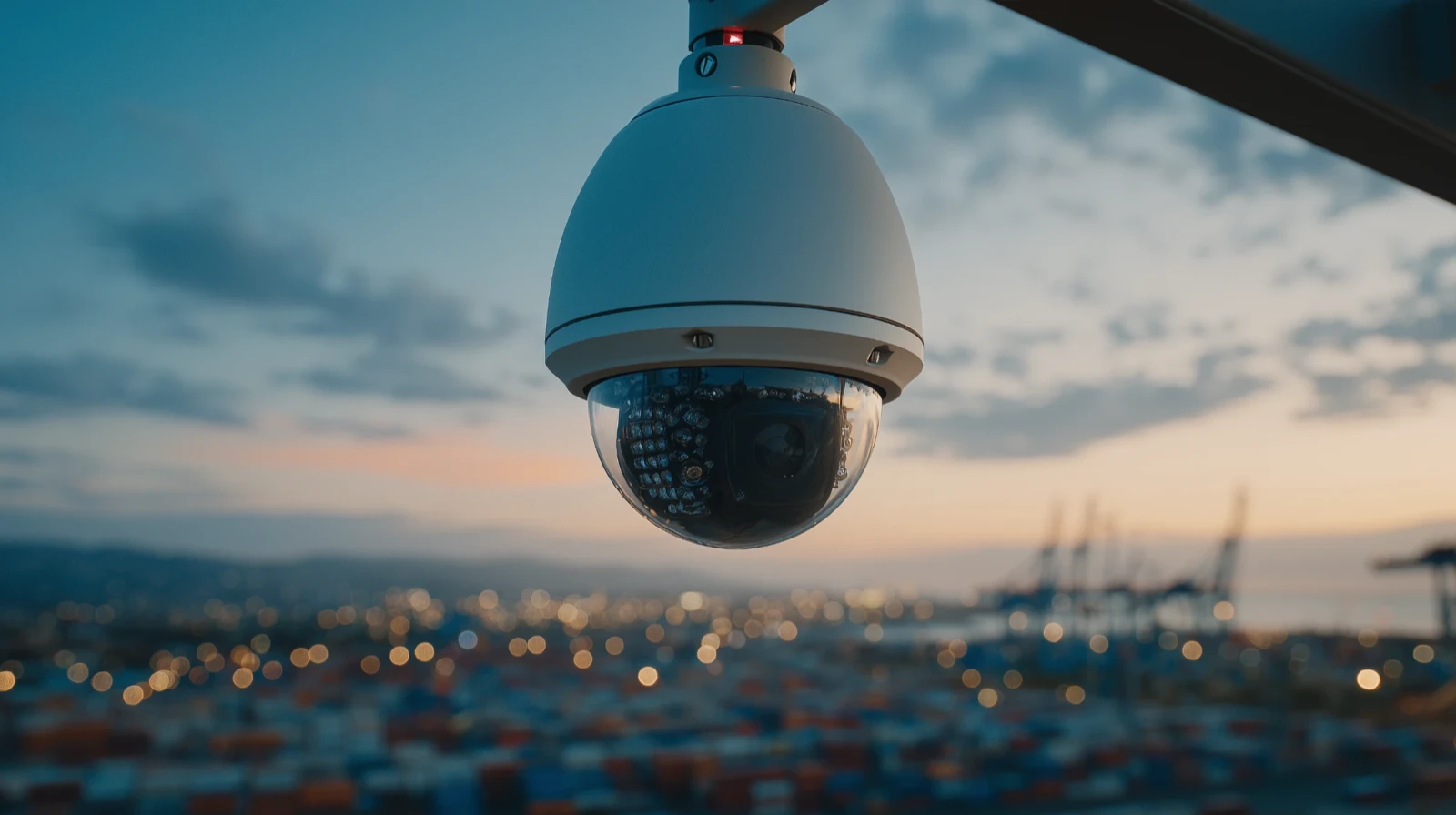
The best security camera for commercial use depends entirely on the area you need to cover, since no single camera type handles every environment well. Fixed dome cameras suit interior spaces like lobbies and hallways, offering discreet, tamper-resistant monitoring. Bullet cameras excel outdoors, providing long-range, directional views ideal for perimeters and entrances. For large open spaces such as warehouses and parking lots, PTZ cameras let you pan, tilt, and zoom to track activity across wide areas, while turret cameras reduce IR glare and offer flexible mounting angles.
When it comes to the best commercial grade outdoor security cameras, weather-rated bullet and turret models lead for targeted coverage, and multi-sensor or panoramic units capture sweeping wide-area views with fewer devices. Specialty options extend your capabilities further: thermal cameras detect intrusions in total darkness, license plate recognition (LPR) cameras log vehicles, and AI-enabled analytics flag genuine threats while cutting false alarms.
Your choice between IP and analog systems matters too. IP cameras deliver higher resolution, smarter analytics, and easier scaling, making them the standard for most Jacksonville facilities. Ultimately, matching each camera type to your facility’s specific security risks builds the best commercial security camera system for your budget and layout.
What Features Should Jacksonville Facility Managers Prioritize When Buying?
The best commercial grade outdoor security cameras combine 4K resolution, IP67 and IK10 weatherproofing, color night vision, and AI analytics that filter false alarms. In Jacksonville’s climate, weatherproof and vandal-resistant ratings come first: cameras rated IP66 or IP67 survive driving rain and hurricane-season humidity, while IK10 housings resist tampering and impact.
Resolution matters where detail counts. A 4MP camera covers general monitoring, but 4K becomes essential for reading license plates, identifying faces at distance, or watching large parking lots. Pair that with low-light performance—starlight sensors and color night vision capture usable footage after dark, where basic infrared only delivers grayscale.
AI-powered analytics separate a good commercial security cameras system from a great one. Object recognition distinguishes people from vehicles and animals, cutting the false alarms that drown your team in useless alerts.
Plan coverage deliberately: match focal length and field of view to each zone, then choose storage—NVR, edge, or hybrid—based on retention needs. Finally, prioritize scalability and cybersecurity. Your best outdoor security camera system for business should integrate with access control and alarm platforms while using encrypted, regularly patched firmware to keep networked cameras from becoming a breach point.
How Much Does a Commercial Security Camera System Cost to Buy and Install?
A commercial security camera system typically costs between $1,500 and $5,000 for a small business installation of four to eight cameras, while enterprise deployments with dozens of cameras, advanced analytics, and redundant storage can exceed $50,000. Your final price depends on camera count, resolution, and system complexity more than any other factors.
Hardware forms the base: individual commercial cameras run $150 to $600 each, an NVR adds $500 to $2,000, and cabling, mounting, and labor for security cameras for business installation often equal or exceed the hardware cost. Professional installation raises upfront spending but reduces downtime, ensures proper coverage, and protects your warranty—key tradeoffs against DIY.
Choosing the best security cameras for business without subscription eliminates recurring cloud fees, though you take on storage and maintenance yourself. Subscription systems spread costs but add up over years, so weigh long-term ownership carefully.
In the Jacksonville market, storm-rated equipment and outdoor runs can nudge pricing higher. When searching for commercial security cameras near you, vet installers covering Jacksonville and the rest of Florida by licensing, references, and manufacturer certifications.
Phased deployment lets a small business security camera system grow with your budget—wire for full coverage now, add cameras later. For a cost breakdown from another Southeast market, see what camera system installation costs in Memphis.
What Legal and Compliance Rules Apply to Commercial Camera Surveillance?
Your employer can legally record video of you throughout most of the workday in Florida, as long as cameras cover areas where employees have no reasonable expectation of privacy. That single principle drives nearly every compliance decision you make.
Video-only surveillance is permitted in workspaces, entrances, sales floors, and parking lots. Cameras are prohibited in restrooms, locker rooms, changing areas, and break rooms where privacy is expected. Audio is the sharper line: Florida’s two-party consent law makes recording conversations without everyone’s consent a felony, so most business systems disable microphones entirely.
Notification matters. Posting visible signage and documenting surveillance in your employee handbook both establishes consent and strengthens your legal position. Beyond that, build a written surveillance policy covering who accesses footage, how long you retain it (30 to 90 days is common), and when clips get shared with law enforcement.
Done right, surveillance protects you as much as it monitors others. Timestamped footage resolves liability claims, supports workplace safety compliance, and settles disputes with evidence rather than guesswork. Restricting access, encrypting stored data, and logging every export keeps that evidence admissible and your business defensible.
Conclusion
Choosing the right commercial security cameras comes down to matching camera types—dome, bullet, PTZ, turret, multi-sensor, or specialty—to your facility’s specific risks, then prioritizing resolution, low-light performance, weatherproof ratings, and AI analytics. Factor in system size, installation approach, subscription costs, and Florida’s surveillance and privacy laws, and you’ll build a system that protects your facility without legal headaches. Getting all of this right takes experience. If you’d like expert guidance tailored to your facility, reach out to DCMM for a clear path forward.