Key Takeaways:
Church leaders often walk into the sanctuary and feel that their technology looks dated, but aesthetically old is not the same thing as mechanically failing. True end-of-life for an AV system occurs when you can no longer buy replacement parts, or when your mixing console begins dropping audio during critical worship moments. Effective stewardship requires adopting the 80% rule: when your sound system or network reaches 80% of its maximum capacity or expected lifespan, you must begin planning the upgrade. Waiting until the system hits 100% capacity guarantees a catastrophic failure on a high-attendance Sunday like Easter or Christmas.
Many well-meaning finance committees in the Atlanta metro try to save money by approving continuous, small repairs on aging equipment. This creates compounding technical debt. You must remove emotional attachment from the equipment and look at the cold math. If you spend $1,500 patching together an old analog soundboard over the course of a year, and a modern digital replacement costs $3,000, you are wasting the church’s resources. When annual repair costs hit 50% of the replacement price, the most fiscally responsible decision is to let the legacy equipment go and invest in a reliable, modern solution.
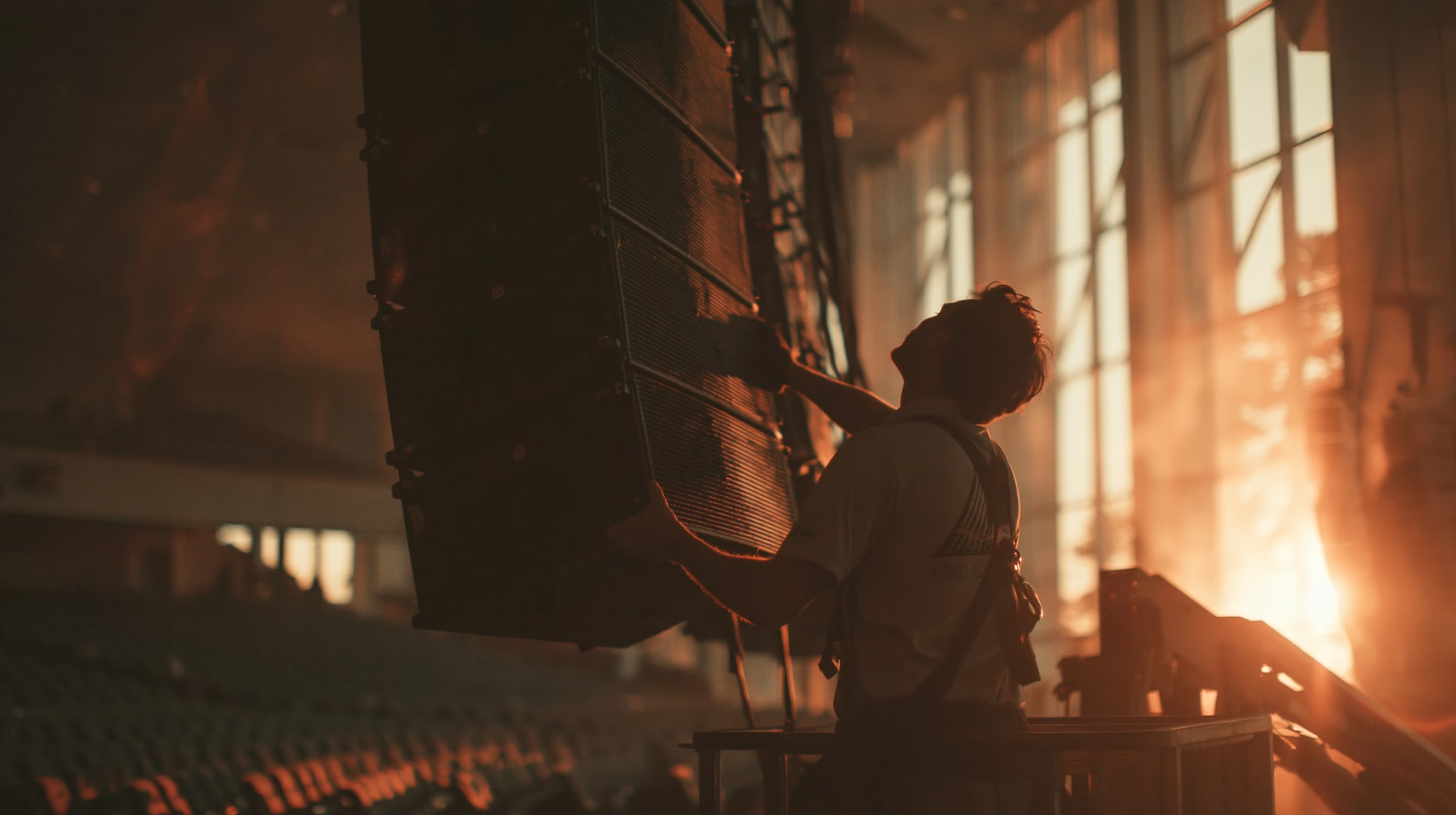
If your church is undertaking a massive building renovation or constructing a new facility in Gwinnett or Cobb County, a standard industry benchmark is to allocate up to 30% of the total project budget specifically for technology infrastructure. When deciding how to spend those funds, apply the 80/20 rule: focus your dollars on the elements that serve every single person in the room. A pristine line-array speaker system and a high-definition projection setup will impact the congregation’s ability to engage with the sermon far more than expensive lobby displays or decorative accent lighting.
The biggest mistake churches make during a renovation is succumbing to “shiny object syndrome.” It is tempting to buy new PTZ cameras or moving stage lights, but none of these devices will function properly without a robust foundation. Your network infrastructure is the central nervous system of your modernized worship space. Before you purchase any new digital AV gear, you must install commercial-grade network switches, pull dedicated Cat6A cabling to every corner of the room, and build a system that can handle the massive data loads of Dante audio networking and multi-campus streaming.
The temptation to let a well-meaning congregation member design and install your new AV system is strong, but DIY church tech projects almost always end up costing more to fix than doing it right the first time. Partnering with a professional AV integrator ensures that your new equipment is fully compatible, properly tuned for your specific room acoustics, and installed to commercial safety codes. A professional partner will also provide the hands-on volunteer training necessary to ensure your weekend tech team can actually operate the new system with confidence and ease.
DCMM LC © 2025. All Rights Reserved.
Powered by Astrowave | Privacy Policy.
